Tuesday, July 7, 2015

Wishing Ruth a Happy 104!

Wishing Ruth a Happy 104!

Today, July 7th 2015, marks the 104th birthday of Ruth Ford. As I work my way through what feels like bottomless boxes of papers and photographs that Ruth left behind, I come across lots of little gems to remind me of Ruth’s extraordinary life. I came across this photograph for example, from 1967, in which Ruth is seated with Bobby Short, Tallulah Bankhead and Rex Reed at a table in what looked to be a restaurant. 
Ruth with Bobby Short, Tallulah Bankhead and Rex Reed, 1967.

The matchbooks on the table say “The Living Room,” and doing a little detective work online turned up a few details in an old newspaper clipping. It seems that Ruth and Rex Reed gave a party for Bobby Short, and they asked guests to come either as themselves or as a favorite movie star. This is why Tallulah Bankhead came dressed as Bette Davis. I didn’t know until now that Bette Davis was Tallulah Bankhead’s favorite movie star, but life is much better now that I know.

On the wall behind Ruth is a poster for the movie Forgotten Women, made in 1949. Ruth wasn’t in that one—I checked—but she made her share of movies, and had more than her share of fun, excitement, glamour and evenings like the one in this picture.  What I want to tell her, wherever she is, is that she’ll never be called a Forgotten Woman, not now or ever. I think she would appreciate knowing that. Being forgotten wasn’t Ruth’s style.

Happy Birthday, Ruth. May glamour always be your guide.

RUTH FORD
JULY 7, 1911 - AUGUST 12, 2011

Indra Tamang
07/07/2015
Copyright Indra Tamang, 2015, all rights reserved. 

Thursday, April 23, 2015

A note on Judith’s Passing

A note on Judith’s Passing

Much has been written about Judith Malina in the short time since she left the world, and I don’t think there is anything more to be added; she was admired and beloved for what she did in the theater, and for what she wrote as a diarist and poet, and for what she achieved as a political activist, and for who she was as a person. Charles Henri Ford knew Judith (and her husband Julian Beck) since the early sixties, and he often spoke about them. The experimental aspects of the Living Theater was something that he very much liked, maybe in part because his own work was always very experimental too. 

Over the years, I saw Judith and Julian many times in New York, usually after attending one of their plays. I spoke to Judith whenever I saw her, although I no longer remember what we talked about. I just remember that it was always nice to talk with her, and I’m sure that anyone who has ever chatted with Judith knows what I mean. 

The photograph I’m including here is one that I took in 1984 of Ira Cohen, Julian, Judith, and Charles. It was taken in Paris, in Charles’s apartment on the Ile Saint Louis. I wish I could remember what all were talking about that afternoon in Paris, but I had never been one to keep a diary of who said what to whom. I wish I had been. Of course Ira was there, which probably means that he did most of the talking.

Whenever we were in Paris, Charles would invite people visiting from America or elsewhere to come and have tea. One thing he never allowed was smoking. If someone went to light up a cigarette he would stop them. But on that day he allowed Judith to smoke, and this I think was a gesture of respect for her on his part.

It always struck me that somehow, in a way, Ira, Julian and Judith all looked alike. It was something about their style—their dress and manner—it was a fashion and way of being, very specific to them. Now they are all gone. I know that until the last minute, Judith was still writing, still thinking of directing theater, still living life. She was one of the last posts standing from a whole group of luminaries. Sadly, yet happily, the torch is passed. 
Judith Malina with her husband Julian Beck at her side, Ira Cohen and Charles Henri Ford. Photo taken at Charles' Apartment in Paris sometime around 1984. Photo by: Indra Tamang

In memory of Judith Malina

June 4, 1926 – April 10, 2015

May her spirit have safe, but adventurous travels


Tuesday, February 10, 2015

107th BIRTHDAY OF CHARLES HENRI FORD

A CELEBRATION FOR CHARLES HENRI FORD

Charles Henri Ford. Gin Beach. Montauk, NY 1995.

As February 10th approached, I was looking through some old letters from Charles to his mother, Gertrude Cato, and in the one sent from Rome, dated 7 February 1953, Charles wrote, “Thank you, honey, for the birthday greenery. Pavlik’s ordering a cake from the Bar Tranquil in Frascati.” 

He then listed the friends he’d invited to a cocktail-buffet: Channing Hare, Stevie Hensel, Truman Capote, Stark Young, and a few others, including a French fashion illustrator who had a Rolls Royce for everyone to ride in. In the letter, he also told his mother that the night of the 10th was Carnival in Frascati, so after going to that he was planning to celebrate his birthday again in Rome, on February 12th. This means that in 1953 Charles had two birthday parties. 

And why not?

Charles loved birthday parties, his own and other peoples’ too. When I try to think of a favorite birthday party for Charles during my years with him, the Mudd Club comes to my mind. It’s been so long since Steve Mass threw that party for Charles that I no longer remember many details, but I do remember Kimon Friar being there. He was the man responsible for translating all the books of Nikos Kazantzakis from Greek to English, and for writing a book about him called The Spiritual Odyssey of Nikos Kazantzakis. Charles and I saw him many times in Greece, and for some reason he’s the only specific guest I remember from the party at the Mudd Club. I also remember Charles showing his Poem Poster movie that night, a film he made himself at the opening of his Poem Poster Show of 1965. The film “starred” Jayne Mansfield, James Rosenquist and Andy Warhol.


I don’t recall too many big parties at the Dakota. Usually events at the Dakota were small. Certain people, particularly among the poets we all know, would want to come at different times in order to avoid each other. Ted Joans couldn’t stand Ira Cohen, for example, and I don’t know what Ira thought of Ted, but Charles liked both Ted and Ira. Ruth used to buy Ted’s poetry books in bulk, twenty at a time. She’d have him sign them and then give them as gifts to her friends. Sometimes Ted ran out of his own books and then he’d ask Ruth if she still had any. And if she did, she’d give them back. Nothing pleased Charles more than Ted Joans coming to the Dakota with sweet potato pie brought down from Harlem. 

Had Charles lived, he would be 107 years old today. At the end of his life his mind was sharp and clear, and I’m sure he wouldn’t have minded living to be 107. I don’t think either Charles or Ruth ever thought for a minute that they wouldn’t just live forever, at least that’s the impression I always had. Ruth was always thinking she’d be getting ‘better’ soon, even though there was nothing wrong with her but age. 

Thankfully, Charles never seemed the least bit frightened at the end of his life. When it came to living, he always said, “Just play it as it lays,” and that’s what he did. And he enjoyed every birthday, and every other day too, to the fullest.

Happy Birthday, Charles. I hope wherever you are, it’s a good one. 


Marcel Duchamp’s cover design for View magazine (1945). Charles was editor of the magazine.


Indra Tamang
02/10/2014


Copyright Indra Tamang, 2015, all rights reserved. 


Friday, November 7, 2014

A Memorable Trip To Nepal After Thirteen Years

A Memorable Trip To Nepal After Thirteen Years

Baudhanath Stupa. Baudha, Kathmandu, Nepal.

A big part of this past summer—June 27th through August 21st—I spent in Nepal with my wife Radhika and daughter Zina. They had both been to Nepal in recent years, but for me it had been 13 years since my last visit, and I am recording here some of the highlights and impressions from the trip.

Upon arriving in Kathmandu we were received by my bother Suraj, his son Nirajan,  and my cousin Shanta Thokar along with his son Samir and his friend Prakash Shrestha at the airport. After that we went directly to our house in Gyaneshwar, where my brother and his family live. Ever since I first lived in that house, which Charles Henri Ford rented in 1973 and later bought, I’ve thought of it as “Charles’s Hermitage”, since he always referred to it as The Hermitage. It is a very old house, much of it in disrepair now. Since I last saw it, the area has become more crowded and modernized, and Charles’s Hermitage looks like a real antique sitting there now, surrounded by much newer and taller buildings. 

The rice paddies around the city have all but disappeared and everywhere you look are houses, built with money mostly sent from abroad. (Many, many Nepalese people have gone to other countries to find work as laborers and they send money home.) When I was young, there were hardly any modern buildings in the country but now there are many. Kathmandu has become a concrete jungle like New York City. There are also big disparities in how people live in Kathmandu, which has a lot of shantytowns and real poverty, but a lot of very luxurious homes as well. I saw people living in tiny shacks made of paper right in the road, and if you look between or behind the new luxurious buildings, you’ll see houses made of rotten metal and tires and plastic trash bags where very poor people live. Shantytowns have existed in Kathmandu for a long time, but now there seem to be more. As the population grows, so do the classes: upper class, middle class, lower class and sadly, some people have no class at all. Most of the politicians live in luxury. I visited a few houses belonging to people I actually know that were so luxurious—with marble floors and beautiful bathrooms and expensive Western furnishings—they made our house in Queens seem like a dump in comparison. Two especially unfortunate things about Charles’s Hermitage were a shortage of water and mosquitos. There was barely enough water to flush the toilet, and the plug-in mosquito repellent only worked when we had electricity. That meant that nighttime was bad for us but good for the mosquitos!

But what mattered the most to us was seeing all of our family members who welcomed us with such happiness. We were all very glad to see each other, and the phone never stopped ringing. The very next day of or arrival we went to wedding reception party of Radhika’s niece Roshani Lama, where we met many of our friends and relatives. After few weeks, we met our good friends Penny Rana and her husband Hemadri Rana. They were our guest when they were in New York a week before we left for Nepal. I had known Penny since her childhood when she used to be our neighbor in Gyaneshowr. They took us to tour Bhaktapur and Nagarkot, and they treated us with lunch at Nagarkot. They also invited us to dinner at their house in Baluwatar some weeks later. On July 12th, I hosted a get together party for my friends and relatives at Lotus Banquet Hall, Kaldhara, Kathmandu. Many of Radhika’s family, friends and relatives came from Boudha to attend. I had invited several former diplomats from New York who now live in Kathmandu. Among them were Mr. Madhu Raman Acharya (former Nepalese Ambassador to the United Nations, NY) and his wife Dr. Geeta Acharya, and Mr. Madhuban Paudel (former Ambassador to Kuwait) and his wife. Several people I have known from New York were present at the party. The Nepalese cyclist Furtemba Sherpa came with his family, and a number of entertainers—actors, and singers whose music I’ve listened to for years—and in total, about 400 people with known and new faces were present. Also on the guest list were members of the Tamang Media Group in Nepal. I used the occasion to present them with a donation of money, raised by about half a dozen people including myself, on behalf of the Tamang Society of America. It was a very enjoyable party for all. The only sad thing was that we had planned to bring all of the relatives and neighbors from my village of Phakel, and booked three buses for that purpose, but on the day preceding the party one of our neighbors in the village died, so the people were not able to come. 

I went to visit my village four times, all four of those trips riding the back of my brother’s motorbike. How different that is from the way it used to be, when we walked on pathways and the trip from Kathmandu took almost a whole day. On the motorbike it only took an hour and a half. The village itself has changed very much since I left, starting with the fact that there is a road now. There is also electricity and running water, things that were unheard of when I was growing up. These days everyone has a decent house to live in, everyone has cellphones and many houses have televisions. 

On my third trip, I gave a party in the village and invited all my relatives and neighbors to make up for the one that they missed. This time I took my wife Radhika and daughter Zina to visit my village, which was their first visit ever. I also invited singers Prem Lopchan, Roj Moktan and Sanjeev Dong as a guest to the party and they generously performed at the party with their songs. The event was very entertaining, and all of the guests had fun. When I asked Zina what she thought of my village, the one thing Zina didn’t like were the toilets, which are squatting-style toilets flushed with water from a bucket. When I was growing up there, of course, we just went into the bushes when we had to answer a call of nature. It reminded me of something years ago in Charles’s Hermitage: we installed a Western style toilet in the house, but many of our visitors had never seen such a toilet. So they climbed on it and squatted, or they straddled it, which was not very comfortable, so I replaced it with a squatting toilet. 

Me and Radhika at the party we organized in my village of Phakel with former Member of Parliament Mr. Bir Bahadur Lama.


Radhika was not particularly impressed of my village at first, but eventually she came to like it. It is similar to the one where she grew up, Kakani, her mother’s village. Both our home-villages are in high altitude, full of nature and fresh air. Kathmandu can get very sticky, humid and hot, and the air quality isn’t good either, so going to one of our villages, where everything is dry and light, feels completely different and very pleasant. In Kakani, Radhika’s mother owns a plot of land. Radhika along with her brothers and sister-in-laws arranged for busts of her parents to be made and erect on a small plot of that land. She had invited fifty or sixty people from Kathmandu for the occasion of unveiling the busts, with a Buddhist ritual ceremony conducted by several monks. Radhika and her brothers and sister-in-laws also gave a after-party for the guests there after the ceremony.

Busts of Radhika's parents erected in Kakani 


Another nice memorial in Radhika’s family, to which she contributed, are the seven or eight water fountains in Asapuri, built in her parents’ names by her brother and uncles. People use those fountains for bathing. Traveling to Asapuri was a very frightening experience. We took a bus and the only route was very narrow and steep dirt-road. The bus seemed to be driving on the edge of the road and it really looked as if it might go straight over the cliff, and some of the passengers on the bus actually cried. Zina was one of the terrified bus passengers who cried. Had we known how scary and dangerous the ride would be, we would have brought her in one of the cars on the trip instead.

One thing that has not changed in the village is the presence of goats and chickens running around, and the attitude of the roosters is the same as their ancestor roosters who lived there when I was young. Much of the surrounding forest has not changed as well; in fact, I think it might be denser than it was years ago. The farming styles have been modernized so people don’t graze their animals in the forests anymore. Mushroom farming, as well as growing cabbage, cauliflowers, carrots and all kinds of other vegetables have replaced the corn and millet growing of the past, and now the farmers have trucks to carry their produce to the cities. I will always remember, as a kid, the way we carried our produce on our backs almost all the way to the city, walking. All the young people in the village now have motorbikes, and the paths we used to walk on are no longer used, so they have become overgrown with bushes. One of positive consequences of this is that without so many people and animals using those paths, leeches have all but disappeared. When we used those pathways, the leeches would smell us coming. They’d lie waiting on the leaves and grab on as we passed. I’m not sure if they are disappearing for that reason, but it would seem that with less blood drinking they are not reproducing as much. Even so, I did get bitten by one of the few leeches still hanging around. It itched like mad for weeks!

During my Nepal trip, I also had chance to visit Pokhara, a beautiful city approximately 200 km west of Kathmandu. One of the members and previous secretary of Tamang Society of America, Amar Tamang, who from Pokhara, had recommended me as chief guest to honor students graduating from local high school organized by Nepal Tamang Bidharthi Ghedung, Kaski, coordinated by Deepak Waiba. So we traveled there, where I had the privilege of meeting board members of Tamang Ghedung Sangh, Kaski District, and signing the certificates of appreciation for Tamang students. I also made a donation of a little sum of money as a contribution to their organization. My brother and I made the trip together, and he wrote me a fine speech in Nepali. I made another trip to Pokhara with my family and stayed three or four days. I had a good time there. I have always liked Pokhara. It is better for walking, because it is surrounded by mountain peaks and very pretty when it is not cloudy, and the city itself is less crowded than Kathmandu. It is also not as muddy or dusty. When it rains, the water runs off, it doesn’t flood, which means no mud after the rain and no dust from the mud when it dries, whereas in Kathmandu rain means lots of mud and after that, lots of dust. Many people wear masks because of the dust and pollution in Kathmandu, where the traffic is very heavy as well. I must give them credit, though, for expanding the width of the roads in Kathmandu, although it would be better if certain rules would be applied to motorcycles there. They go every which way, and I had no desire to ride one in the city.

At the ceremony organized by Nepal Tamang Bidharthi Ghedung, Kaski, as chief guest to honor and present certificates to Tamang high school graduates.
Photo by Suraj K. Tamang


I felt very humbled to receive a number of honors during my trip, including one for a contribution I made to Chhyorten Tashi Tamang Monastery in Kathmandu. They presented me with a unique certificate which was printed in a Thanka. It was handed to me by the head monk of the monastery Tulku Losang Namgel Rimpoche. I was received by the President Navaraj Lama, Vice-President Man Bahadur Lama, General Secretary Hari Bahadur Lama, Treasurer Kumari Maya Lama along with founder Karma Siddhi Lama and all of the general board members of the monastery with Khada in the ceremony. I was also invited by Nepal Tamang Ghedung at their headquarter in Putalisadak for briefing of their Tamang Cultural Building Construction Project. We had brief discussion about their prospective project of the cultural building. As I am the coordinator of Tamang Cultural and Buddhist Center, a project of Tamang Society of America, I presented them with brief introduction of our project of building a Tamang Cultural Center in USA. The meeting was very fruitful, and we exchanged ideas and views of our projects. Buddhist Monastery is something my village does not yet have, and I know that people are hoping that I will help to build one. Few years earlier, I donated money to construct a crematorium in my village, for which I was honored by the village committee on one of my visits. If the villagers initiate the construction of the monastery in future, i will be obliged to help with my ability. I was also invited at the 20th anniversary of Tamang Prasaran Diwas organized by Tamang Sanchar Samuha’s Central Committee where the president of Tamang Sanchar Samuha, Jagat Dong, presented me with Certificate of Appreciation for Tamang Society of America. At that ceremony I met Dr. Ganesh Yonjan (former ambassador to Japan), Amrit Yonjan (a Tamang Culture  and Linguistic Scholar), Kumar Yonjan (President of Nepal Tamang Ghedung) and many more popular and respected Tamang figures.

Receiving Certificate of Appreciation on behalf of Tamang Society of America presented by Tamang Sanchar Samuha. Kathmandu.
Photo by Prem Lopchan


At the end of July, I made a special trip to Lumbini, the birthplace of Lord Buddha, with my family, my brother, a few relatives and singer Prem Lopchan, total of ten people. We took two cars for the trip, five people on each, which were graciously provided by Sanjeep Dong and Radhika’s Uncle Bir Bahadur Lama, who were with us on the trip. Lumbini lies down in the southern flatlands, the only area where I felt a little like I was a on an American road trip with straight, long roads, but before the long roads we took a very roundabout way full of sharp turns. We had a good time in Lumbini, which is full of monasteries and tourists from all over the world. Every country has built their own monastery there, and interestingly, the best and most accurate monastery, according to Buddhist religious rules, belongs the Germans. We visited the palace in Tilaurakot that belonged to Buddha’s parents, or the site where it was supposed to have been in. Now it’s just a bare ground, but you can see bricks in the earth which imply where the rooms once were. The actual birthplace of Buddha was about 34 miles far away, where his mother gave birth to him under the trees. The local guide showed us where the gates had been in the palace, and which way the young Buddha went when he took his horse and left to seek truth and become enlightened. 

Birth Place of Lord Buddha. Kapilvastu, Lumbini, Nepal. 


After Lumbini, we stopped at a famous wildlife sanctuary, where some of us wanted to ride an elephant and some of us didn’t. It was raining nonstop. Radhika didn’t go, nor did her uncle, but Zina and I went. I was barely able to protect my camera in the heavy rain, which made riding the elephant not very enjoyable, but I caught a cold afterwards. We didn’t see a single wild animal, except one sleeping little deer. We were supposed to see rhinos and tigers, but in the pouring rain they had all gone into the bushes to sleep. 

Our visit to Nepal flew by and our many planned events took up most of our time, so we didn’t get to visit all the places we would have liked to, or visit everyone we wanted to see. But in this way, we left something to look forward to for our next trip. Meanwhile, it’s always nice to return back to New York where there is light with the touch of a button and the toilet always flushes. 

A brief journal of my visit to Nepal was written by Ngima Pakhrin and published in Everest Times, a nepalese paper of New York, on Oct 16-31, 2014 issue. I want to thank both Ngima Pakhrin for writing and the Everest Times for publishing the journal. I also want to thank Romy Ashby for helping me to translate this blog post and Samir Tamang for helping me in the final editing of this blog post. 

Finally, I want to end this by thanking all of the family, friends, well-wishers and supporters who made our home coming trip so nice with their warm welcome. We are very grateful to all of you and we look forward to seeing all of you again.

Indra Tamang
11/07/2014

Copyright Indra Tamang, 2014, all rights reserved. 

Saturday, September 27, 2014

TWELVE YEARS SINCE THE PASSING OF CHARLES HENRI FORD


Charles Henri Ford 
10 February 1908 - September 27, 2002


      Twelve years ago today Charles Henri Ford left this world at the age of 94. As most people acquainted with Charles will know, he changed the spelling of his middle name from Henry to Henri as a very young person to avoid any confusion with the Henry Ford of automotive fame. In poking around the internet, I discovered by accident that the very first Model T Ford car was assembled on this very day, September 27th, in 1908. September 27th is also noted as the day that the Balinese Tiger was declared extinct in 1937, and in 1968 on this date, the musical called HAIR opened in London. The actress Clara Bow, "The It Girl," as they called her, died on this day in 1965, and I'm sure that Charles must have seen all of her movies in his youth, because judging from his early diaries, he never missed a show. This is just a note to let him know, wherever he is now, that he is not forgotten, his dates of entry and exit are always remembered, and this will always be so.

Tuesday, July 8, 2014

On the Occasion of Ruth Ford’s 103rd Birthday

On the Occasion of Ruth Ford’s 103rd Birthday


RUTH FORD
July 7, 1911 – August 12, 2009

In 1911 on this day, July 7th, Ruth was born in Brookhaven, Mississippi. If her brother Charles Henri’s diary entries are to be believed, the two of them had an idyllic childhood full of fun together. They loved to swim if it was warm enough outside, and they found all kinds of ways to amuse themselves around home. On June 23rd, 1922, Charles wrote in his diary: “Sister & I had a circus out in the back yard. We had fortune telling, the Siamese twins, the remains of Lot’s wife, bathing beauties, clowns, a shooting gallery and lemonade. We made $1.05. Not bad…”
A movie ticket cost about a nickel at that time, and Ruth and Charles went to as many as they could manage to see. Early on, Charles thought that his sister had something special that might work for the movies. Soon after Ruth’s 11th birthday, he wrote in his diary that a movie star had come to Memphis, where they were living at the time, and had chosen four ladies and three girls for tryouts. “Sis was one of the girls,” he wrote. “I hope she ‘registers’ right.” He also kept a clipping from the local newspaper from July 12th, 1922, which read:

“Miss Maude George, prominent film star who is making a host of friends during her local engagement at the palace Theatre, was greeted by a large crowd of women and children yesterday in Lowenstein’s millinery salon, where she chose types that would “register well in films.” In order to see how these types actually register, a moving picture will be made of those selected by the star and shown at the Palace Theater and afterwards sent to Universal City, Cal., where it will be observed by directors and producers in need of material.”
Moviestar Mauda George

Maude George really was a prominent actress of her day, starring in movies with titles like The Devil’s Pass Key and Foolish Wives, and she worked with Erich Von Stroheim. I wish I could ask Ruth what she remembers about her first screen test, because whatever the outcome, it didn’t make it into Charles’s diary. However, he was right in his thinking that Ruth had something special, because she ended up being an actress. In addition to her work on stage, she made quite a few movies, especially during the 1940s. Strange Impersonation, Lady Gangster and Adventure in Iraq are just three of the movies Ruth made in those years, and you can see them without paying even a nickel, right here on the Internet. 

So, dear Ruth, you did it. You ‘registered’ well, and you will always be beautiful and young on the silver screen. Wherever you are, I wish you a very happy birthday.

Indra Tamang
07/07/2014


Copyright Indra Tamang, 2014, all rights reserved. 

Friday, June 6, 2014

Driving Trip to Florida

Driving Trip to Florida

Cherry Blossoms in Maryland.

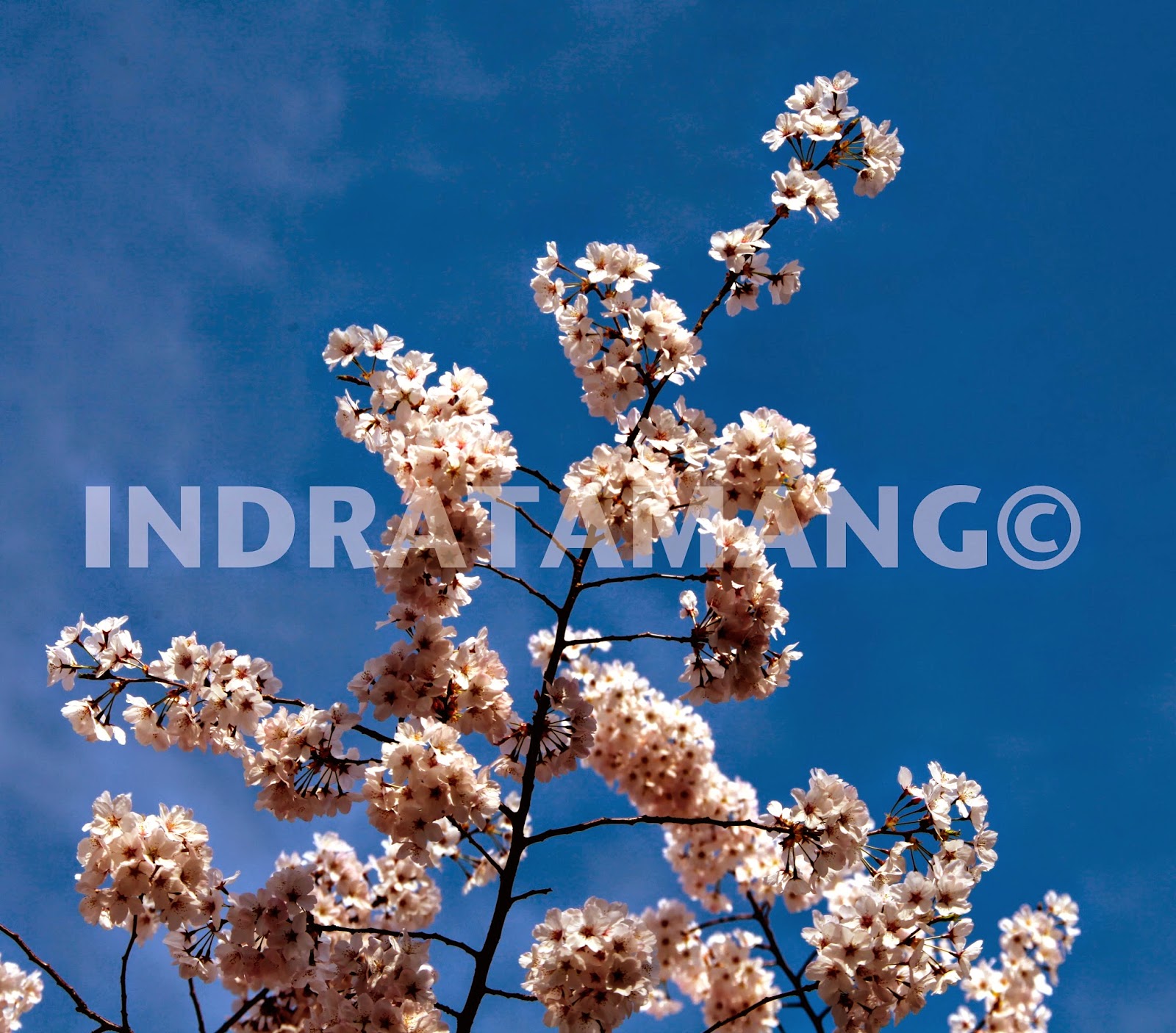
 This past April, when Zina had a two-week vacation from her school, we decided to spend some of that time taking a trip to Florida. We left New York on April 12th,which was a Saturday, and headed to Maryland, where we would spend the first night at our friend Sumitra’s house. The next day, Sumitra, her husband Keshab and her 85-year-old Mother got into the car with us. Radhika’s Mitini (best friend), Pancha Maya, was also with us, making us seven in the car. Before continuing further south to Florida, we visited the cherry blossoms in bloom in Maryland, and then we crossed Washington DC. We had made an appointment to have tea with the President, of course, but to my disappointment he was not available, having other things apparently higher on his priority list than having tea with us.

That night, Sunday the 13th, we spent in a nice motel in Georgia. Everything along the road in Georgia was pretty to look at and the next day, leaving Georgia behind, we drove many hours until we reached Orlando. We decided to skip Disney World since everyone in the car was old except Zina, and she had already been there once anyway, six years ago. So we continued on to the home of Radhika’s cousin Sunny, who lives two or three hours from Orlando at 4743 NW 82nd Ave., Lauderhill, FL 33351. Sunny lives with her mother, her husband and their two little boys. They also have three dogs, in three varied sizes, the littlest one making all the noise. Sunny kept them in the bedroom, and her mother made a big dinner for us. We spent the night there, and then the next day we drove all the way down to Palm Beach.

At the entrance of Disney World, Orlando, FL. 

In Palm Beach we took a little sightseeing trip on a boat, with the captain very busy showing everyone the houses belonging to all the famous actresses and actors and basketball stars and Cuban singers. He pointed out one that had belonged to Elizabeth Taylor and another belonging to Jackie Chan, and we were told that those islands are strictly exclusive to the people who own those palaces, and to visit, one needs a special invitation from a resident. Some of the homes pay taxes of $10,000 a month, and one particular house had 80 palm trees imported from Africa planted around his yard, each one costing $10,000. People were living in heaven on earth in this place in these trophy houses, some of them for just one week a year while spending the rest of the time elsewhere, making movies or doing whatever else they do. Then we drove around looking at all the fabulous gardens and houses in this unimaginable paradise. Everything was green and lush on every road.  

We also took a noisy boat ride through the Everglades. It was full of birds and crocodiles and all kinds of plants and weeds. The boat held 15 or 20 people, and we went speeding through the swamp with the motor up above the roof. The blades couldn’t be beneath the boat because the giant weeds in the water would jam them in no time, and with the motor over our heads, the boat just glided over the water. When it stopped, crocodiles would come towards us trying to sniff us out, but then the boat would move again so as not to give the crock a chance to grab anybody, thankfully. They look very weird, the crocks did, with their always-wanting- something-to-eat expression—and given the chance it would definitely grab someone, and that person would be eaten. It was a package tour, and towards the end of the program they had a crocodile show in an enclosure. There were quite a few crocodiles in this place, where a young man and woman gave demonstrations. These were all crocks that had been captured from people’s back yards rather than the wild—crocks who had attacked pets, etc. They were stray crocodiles, we were told, picked up from the road and from yards. The man explained things about them while woman climbed onto the crocks and played with them. She could put her chin at the tip of the crock’s snout and terrible open mouth, fearlessly.  The crock was held inert under her weight. I took some pictures of that moment. It’s not something I would ever try myself without becoming an expert. The woman would also tempt the crock by putting her hand right near its mouth and then snatch it away just as the crock snapped at her. It was an extraordinary thing to see. 
Daredevil Demonstration with Crocodile. Everglades, Fl.

Back at Sunny’s house, we spent another night after a grocery shopping. Her mother, Radhika and Sumitra made dumplings for dinner, which was delicious. The next day we bid farewell to Sunny and her family and headed back North. We spent the night near Orlando.  From there, on April 18th, we drove many hours back Maryland, arriving at Sumitra and Keshab’s house at almost midnight, and spent the night there.

With Sunny’s family at her residence. Lauderhill, Fl. 
April 19th we drove back to New York, Zina, Radhika and myself. Before making the trip to Florida I had thought, Oh, boy this will be an adventure. And as they say, curiosity killed the cat and satisfaction brought it back. It’s a good place, Florida, overall. I would imagine it would be a nice place to live. But you do have floods and hurricanes to worry about. I would have liked to visit Key West, but it was a little too far. I think it would be interesting to go back there some time, to see where Ernest Hemingway, Tennessee Williams and Harold Stevenson all spent time. I would definitely visit Florida again, but as for living, I have to say that I’m happy where I am, in New York. And even through hurricane Sandy and a few blackouts, we’ve been very lucky that our house has never been affected.

On May 14th, I attended the submission of one million signatures to the Secretary General Ban Ki Moon at United Nations, gathered as part of a campaign to declare Lumbini, Nepal the birthplace of the Buddha. The UNESCO World Heritage Site has already declared Lumbini, Nepal as his birthplace, but the signatures were intended to remind people that Buddha was born in Nepal and achieved his enlightenment in India, since some school textbooks have mistakenly printed India as his birthplace. As printed on the World Heritage web site:

“Siddhartha Gautama, the Lord Buddha, was born in 623 B.C. in the famous gardens of Lumbini, which soon became a place of pilgrimage. Among the pilgrims was the Indian emperor Ashoka, who erected one of his commemorative pillars there. The site is now being developed as a Buddhist pilgrimage centre, where the archaeological remains associated with the birth of the Lord Buddha form a central feature.”

Few years earlier, a handful of people started a campaign to collect signatures to reinforce information about Buddha’s birthplace and further spread it around the globe, an effort spearheaded by Prem Guragain.

May 14th saw a very colorful group of people with Nepali flags and some wearing Nepali dress gathered with news media personnel in front of the United Nations on the occasion of the Buddha’s birthday. It was a full moon day. According to the legend, Buddha was born on a full moon day on 623 B.C. He also achieved enlightenment on a full moon day and died on a full moon day, which makes full moon day very sacred in Buddhism. 
The event was reported on in the Himalayan Times:
Nepalese people with Nepali flags in front of UN building on the occasion of Buddha Jayanti for the campaign to submit a million signatures to Secretary General Mr. Ban Ki Moon. May 14th 2014. New York NY.
Indra Tamang
06/06/2014


Copyright Indra Tamang, 2014, all rights reserved.